Tested by Real Families in Real Weather
Last updated: October 2026. We tested 7 family camping tents across spring, summer, and fall, from the Utah desert to the Oregon coast. Prices verified at time of publication.
If you camp in enough campgrounds, eventually you’ll watch somebody’s tent take off. Not a little flap. The whole thing, rolling across the campground with somebody running after it. Tall family tents catch wind like a sail, and that’s just one of the things a big floor plan won’t tell you on the box. Whether your stuff stays organized on night three, whether the tent breathes when six people are exhaling in it, whether you can actually stand up to change your pants. That’s what separates a good family tent from a big one.
We tested 7 family camping tents across real conditions with multiple kids across multiple states: a summer on the road through the Utah desert, Idaho’s Sawtooths, the Oregon forests and coast, and the California coast; a two-night river trip on the Ruby-Horsethief stretch of the Colorado River in McInnis Canyons National Conservation Area; Grand Teton and Yellowstone; and plenty of nights at home in Colorado. Our own family slept in them, we lent them to friends, and any time we rolled into a group camp with a pile of school families, we handed tents out and asked for honest feedback. Kids ranged from one to five years old, plus a crew of ten-year-olds who claimed one tent for themselves. All in, that’s roughly 60 tent-nights. No controlled lab conditions. Just kids being outside in wind, rain, heat, and the occasional surprise snowstorm.
The 7 Best Family Camping Tents at a Glance
 Rank 1
#1 BEST (best all-around)
Best family camping tent overall
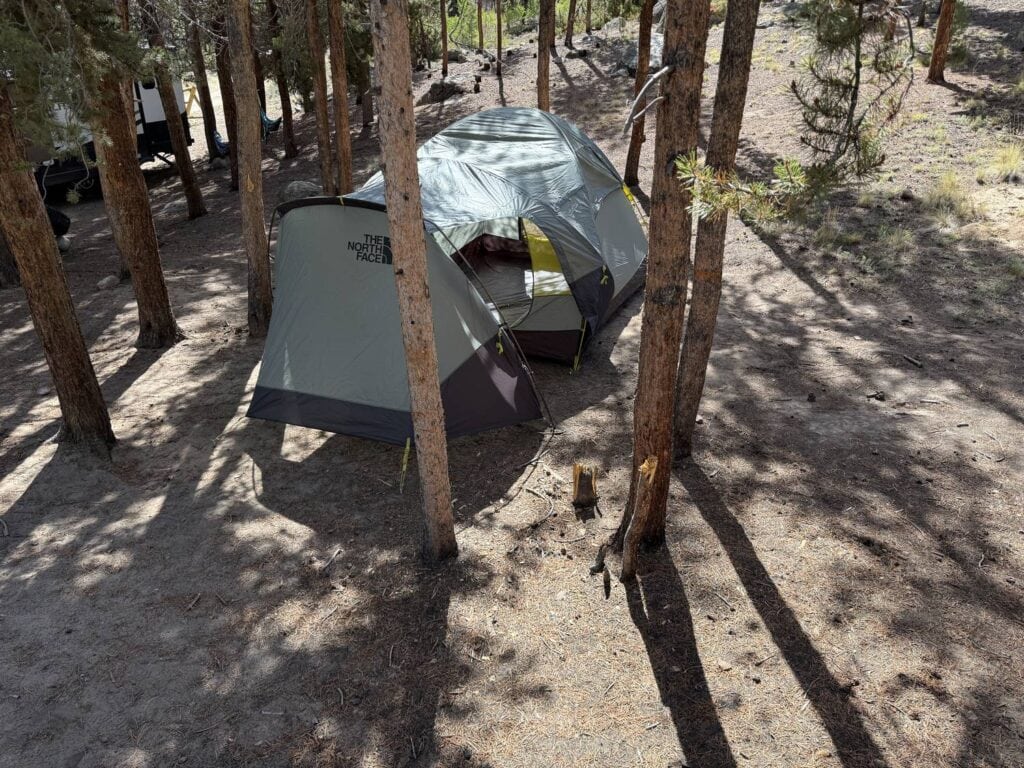
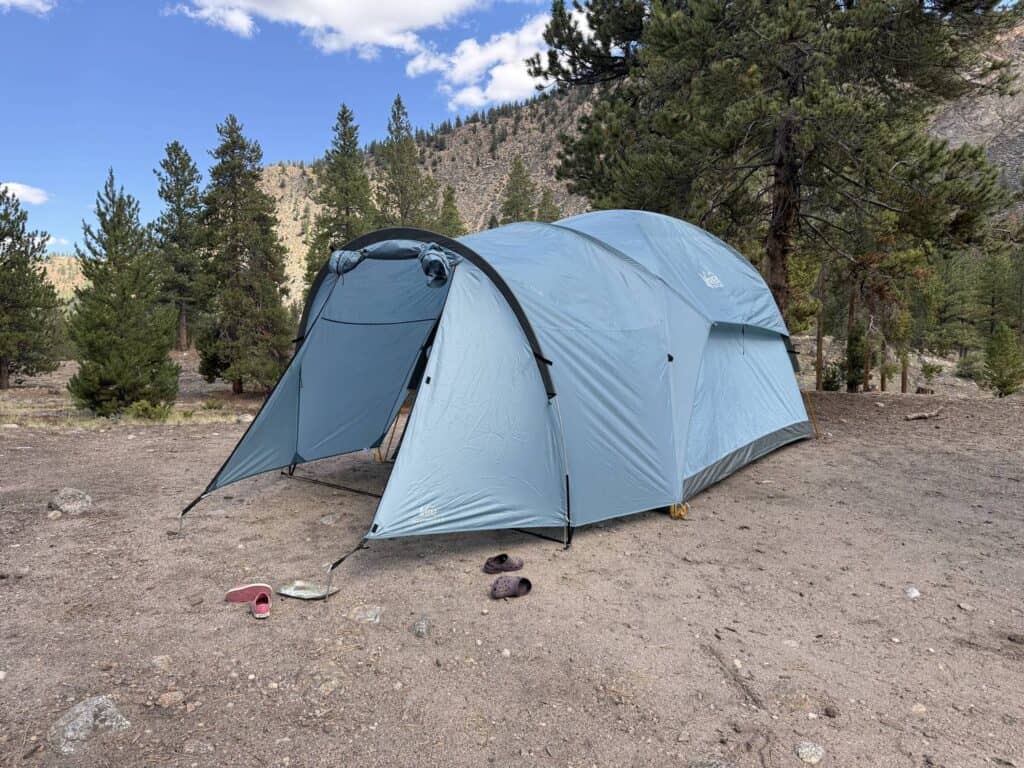
The North Face Wawona 6
A front porch with a tent attached. Budget extra setup time and you won't regret it.
 Rank 2
#2 BETTER (runner-up)
Best family tent for wind and quick setup
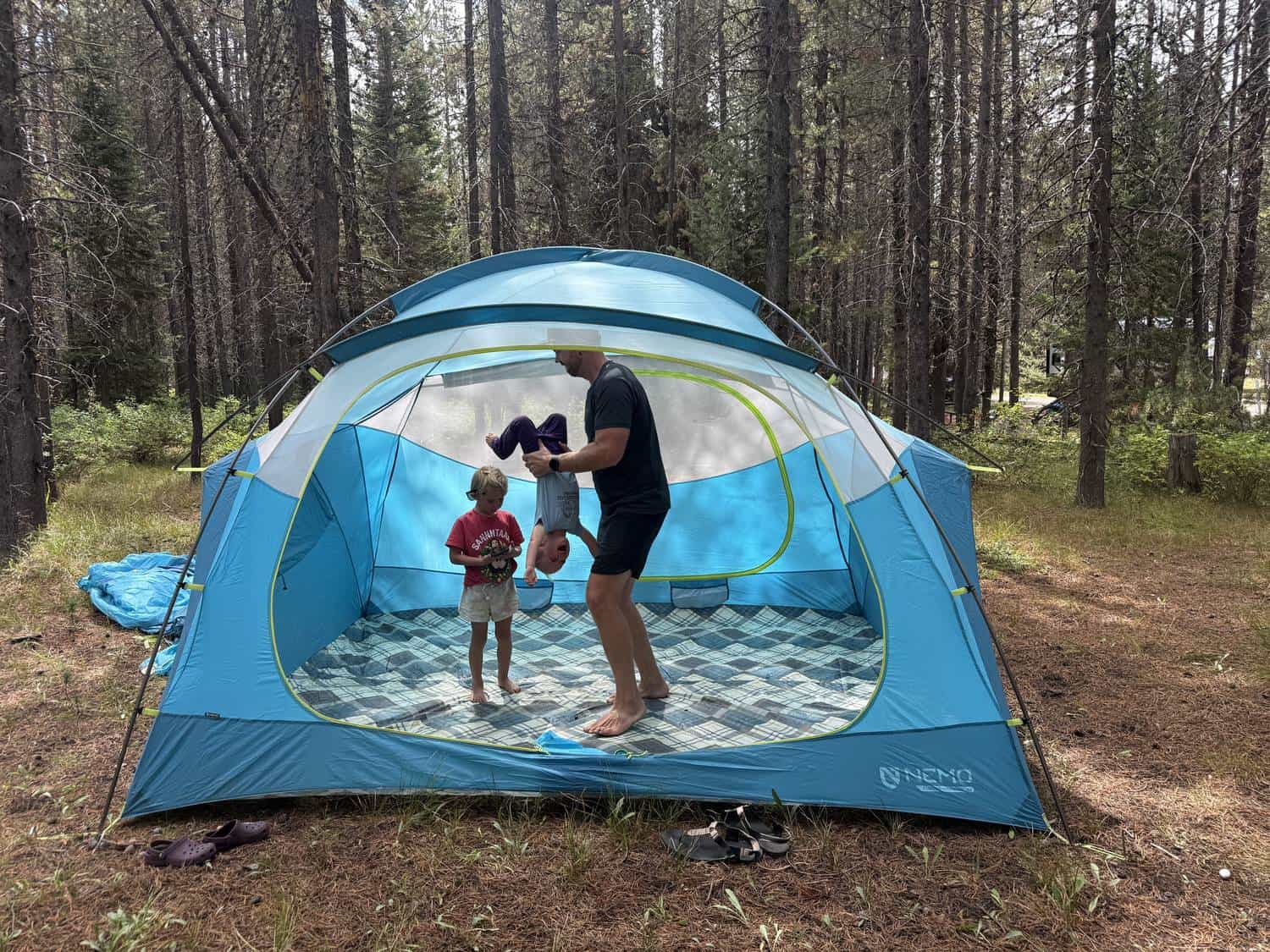
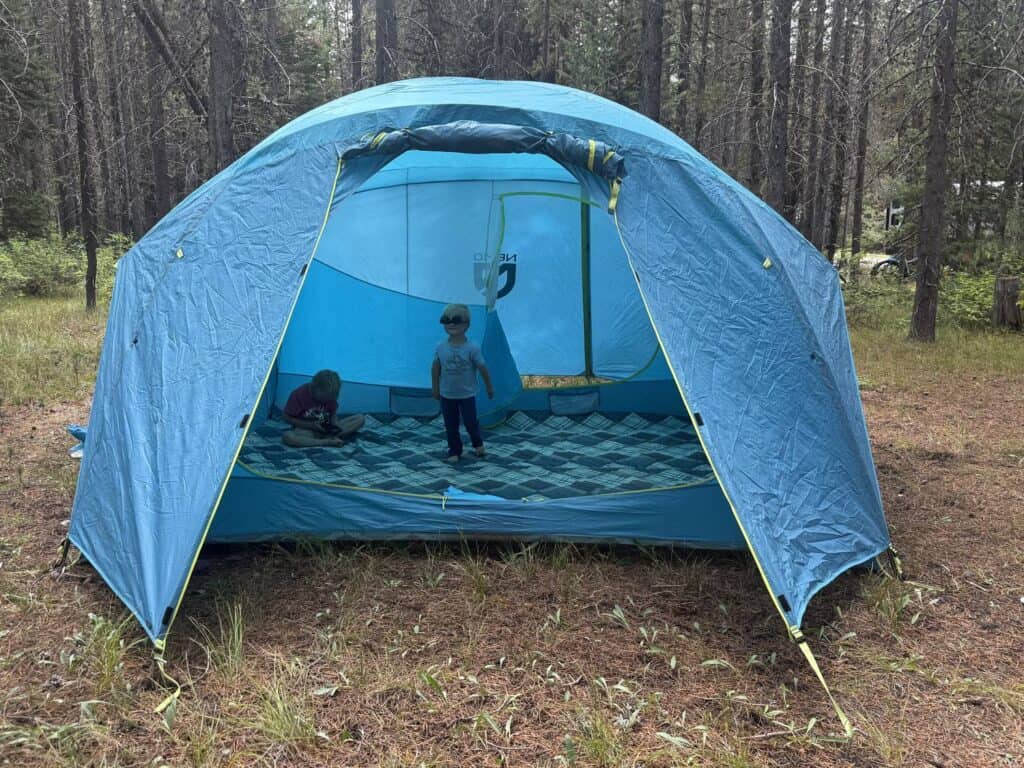
NEMO Aurora Highrise 6
Simple, light for its size, and it stays put when the wind shows up.
 Rank 3
#3 GOOD (budget buy)
Best budget family camping tent
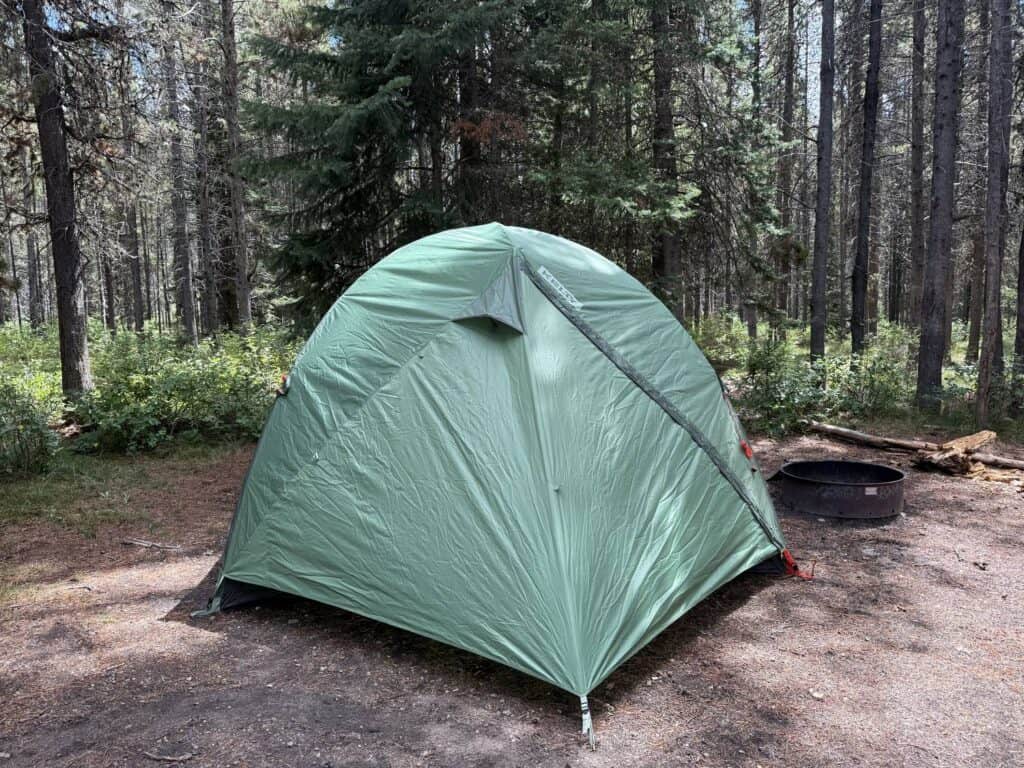
Kelty Wireless 6
A starter tent that does more than its price suggests, as long as the weather cooperates.
And the Rest…
#5. Best crossover tent for car camping and backpacking
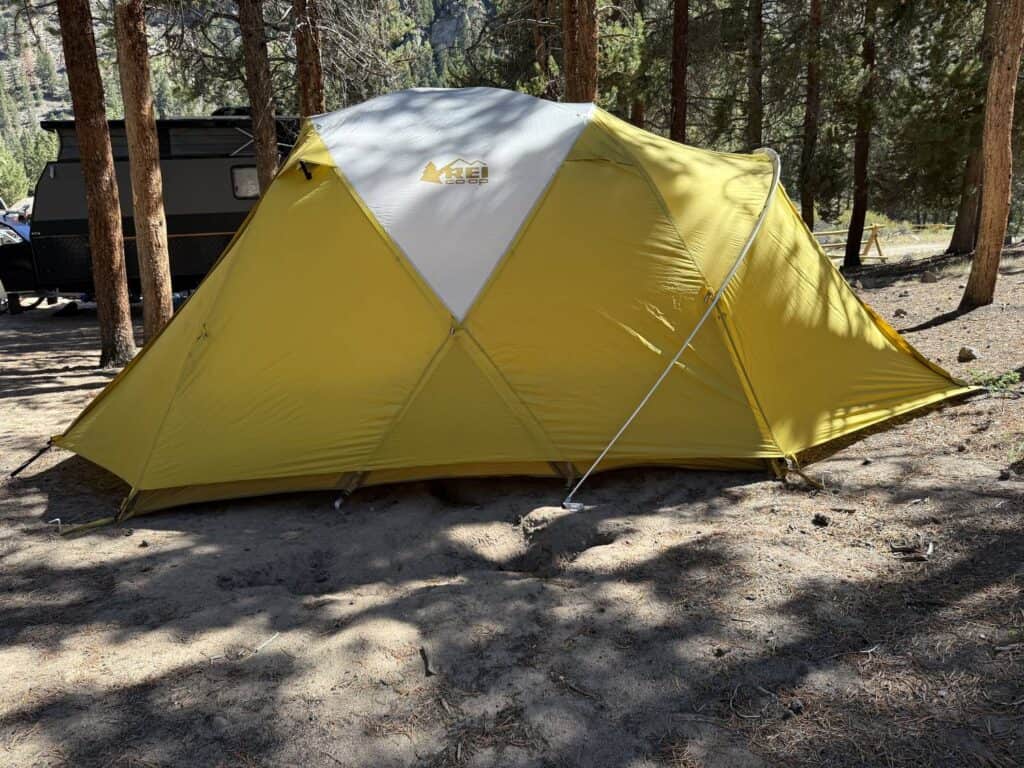
Read our reviewMountain Hardwear Mineral King 3
What Actually Makes a Family Camping Tent Worth Buying
Before we get into the best family camping tents, let’s talk about what you’re actually buying, because “6-person” on the box doesn’t mean what you think it means.
Floor Space Isn’t Livability
A big footprint doesn’t mean a tent is good for organizing a family’s worth of stuff. After a couple of nights, what matters is internal and external storage: pockets, gear lofts and loops overhead, doors that open in a way that makes sense, and vestibules where muddy boots and wet gear can live. Without those, everything ends up scattered across the floor.
Tall Tents Are Sails
Everyone wants a waterproof tent. Fewer people think about wind. Tall family tents catch it like a sail, and if one isn’t staked and guyed down, it can leave without you. Look at how well a tent cinches down, whether it comes with enough guylines and stakes, and pick your spot with wind in mind. Smaller, lower tents shed wind more easily than big ones.
What to Look For in a Family Camping Tent
Ventilation. A dry night outside can still mean a wet morning inside, because a closed tent full of breathing people builds condensation.
Peak height. Too short and you can’t stand up to get dressed; too tall and it gets harder to pitch.
Vestibules. Covered space outside the door keeps gear and muddy shoes out of the sleeping area.
Weight for how you’ll use it. Some tents only make sense in a car; lighter crossover tents can also handle a river trip or a short backpacking trip.
Stakes and guylines. Several tents we tested didn’t include enough to fully guy them out, so plan on buying extras.
A footprint. A footprint or tarp under the floor protects it and helps keep water out; only the Mineral King 3 and Tungsten 4P include one.
How to Size a Family Camping Tent
Ignore the person count on the box and look at the floor dimensions. If you’ve never owned a big tent, tape the floor dimensions out on your living room floor with painter’s tape. It’s the fastest way to see what “6-person” really means. Every six-person tent is a different size, which is why each review here says how many people a tent fits comfortably and when it gets tight. Start with your goal, too: most families want a big campground tent, but if you’ll do any backpacking or river trips, a smaller crossover like the Mineral King 3 or Tungsten 4P makes more sense.
How Much Should You Spend?
The Kelty Wireless 6 ($279.95) is the floor for a tent we’d recommend: fine for backyard nights and fair-weather trips. The sweet spot runs from $400 to $500, which gets you the Mineral King 3 ($400), the Tungsten 4P ($449), or the NEMO Aurora Highrise 6 ($499.95). Better materials and better weather performance cost more, and the premium tier ($549 to $585) is where the Westward 6, Base Camp 6, and Wawona 6 live. That’s where you pay for the biggest vestibules and the most livable space.
The 7 Best Family Camping Tents Tested
Rank 1
#1 BEST (best all-around)
Best family camping tent overall
The North Face Wawona 6
A front porch with a tent attached. Budget extra setup time and you won't regret it.
Pros
- Huge vestibule holds bikes, chairs, and every toy the kids own
- Most campers can stand up inside (76-inch peak)
- No leaks in rain or wind, and quieter than most big tents
Cons
- Slow setup with instructions that don't help much
- Back-door pockets dump their contents when you unzip the door
- Heavy, and the stuff sack doesn't compress or stay shut
Capacity: 6 | Floor: 75.7 sq ft plus a 44.7 sq ft vestibule | Peak height: 76 in | Packaged weight: 19 lb 6.4 oz | How it fits: a palace for 2–3, pleasant for 4–5, snug at 6
Not right for you if: You won’t use the giant vestibule, or you don’t want to haul a heavy tent.
A rainstorm rolled through our camp on the Arkansas River and we didn’t scramble. One of our bikes, the kids’ bikes, and a couple of camp chairs all went into the Wawona’s vestibule, and that was that. The floor isn’t the biggest in its class. The vestibule is why this tent is number one. On a road trip from Colorado to the Sawtooths and the Oregon coast, Cypress (5) and Oren (2) treated it like a garage and a playroom.
It handled rain and wind better than we expected for this much fabric, partial fly and all, and it was quieter than we expected for a tent this size. It does get warm, so open the vestibule during the day when weather allows.
Setup took us 20 to 25 minutes solo, and it helps if you’re tall. Pitch it in the backyard once or twice before your first trip so you learn which poles go where. We’d recommend it for families who’ll actually use that vestibule, not ones who want a quick pitch.
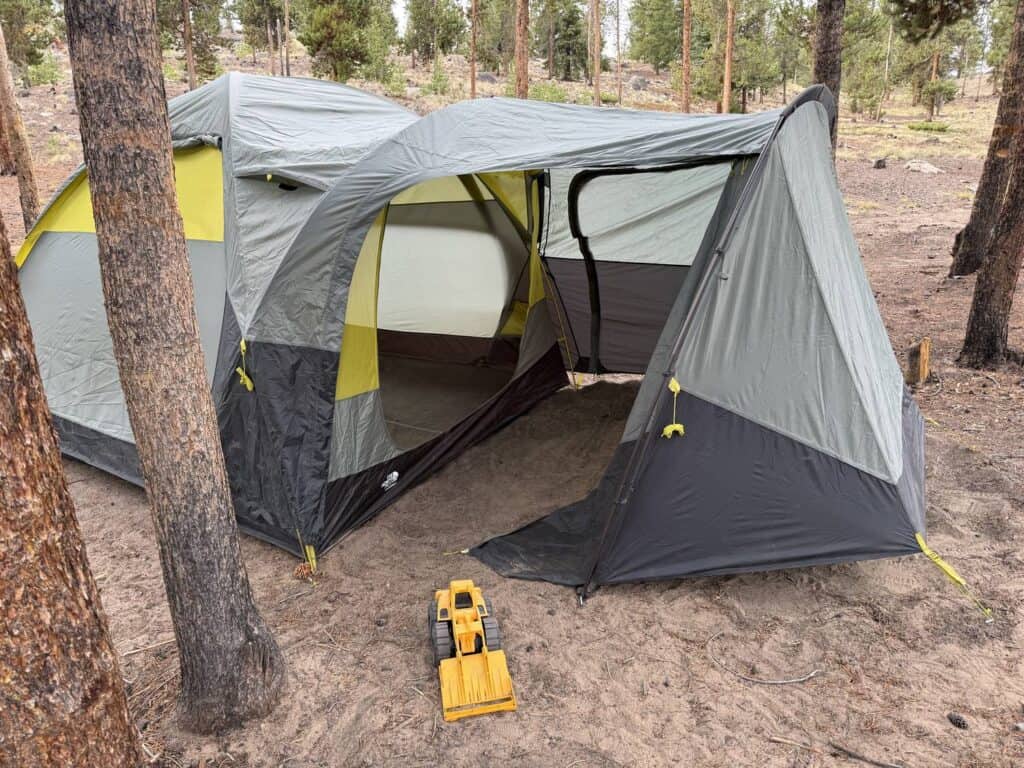
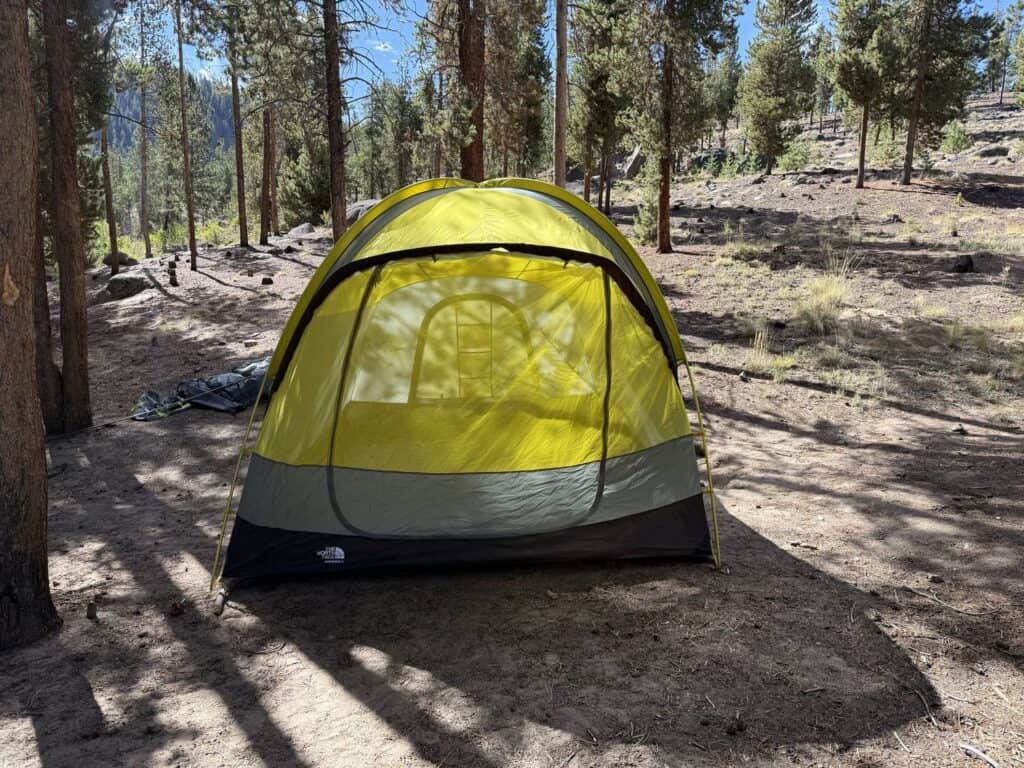
The short version: If your family camps with gear (and whose doesn’t), the Wawona gives it a dry place to live.
Read our more in-depth review of the The North Face Wawona 6
 Rank 2
#2 BETTER (runner-up)
Best family tent for wind and quick setup
NEMO Aurora Highrise 6
Simple, light for its size, and it stays put when the wind shows up.
Pros
- Fast pole setup for a tent this size
- Vents well in heat with both doors and the side windows open
- Pitches tight and stays fairly quiet in wind
Cons
- Ceiling slopes down toward the walls
- Rolling it back into the carry case is a fight
- Pockets are out of reach from your sleeping bag
Capacity: 6 | Floor: 83.3 sq ft | Peak height: 77 in | Packaged weight: 18 lb 10 oz | How it fits: a palace for 2–3, comfy for 4–5, livable but snug at 6
Not right for you if: You want a small tent that’s fully pitched in a few minutes. Getting every stake and guyline set takes time.
We lent this one to friends and their kids, Arlo (4) and Audrey (2), for a river trip through Ruby-Horsethief, where there’s not much to break the wind. A thunderstorm hit, the gusts picked up, and the tent stayed pitched in sandy soil. Their family stayed dry. They don’t camp often, and they told us setup and teardown were easy.
At home in the Colorado foothills, the poles go up fast. Staking and guying it out properly adds real time. The big front door makes hauling an air mattress in easy, and Cypress and Oren used it to drag their toys and treasures in and out all day. Open both doors and the windows and you get a real breeze.
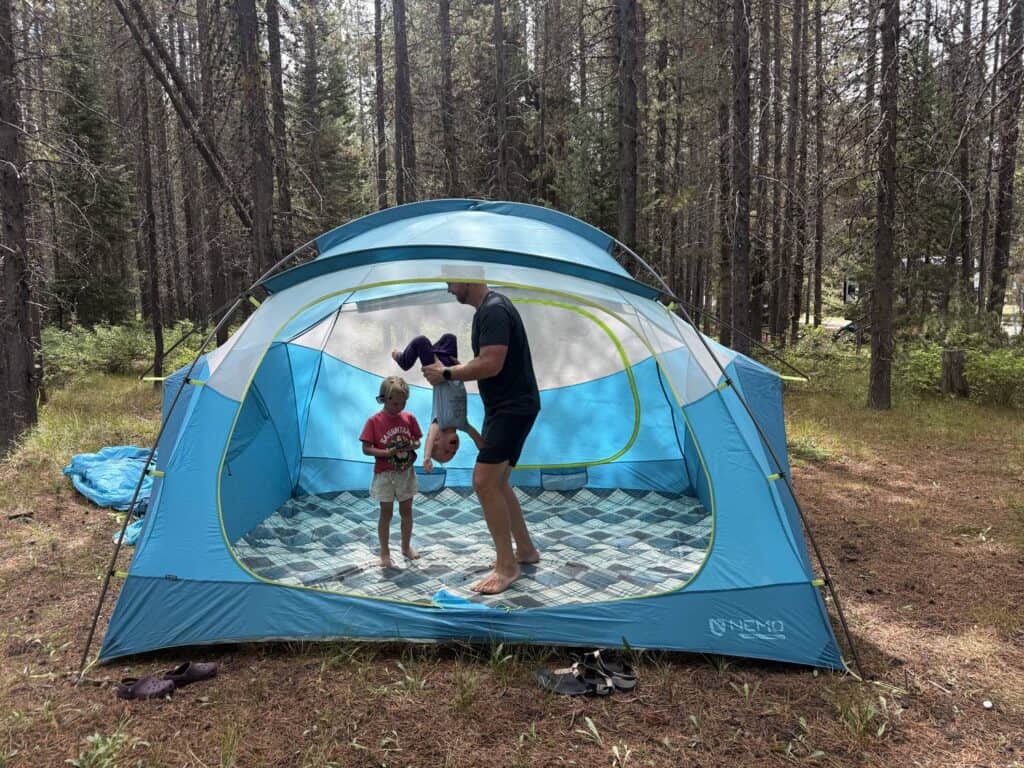
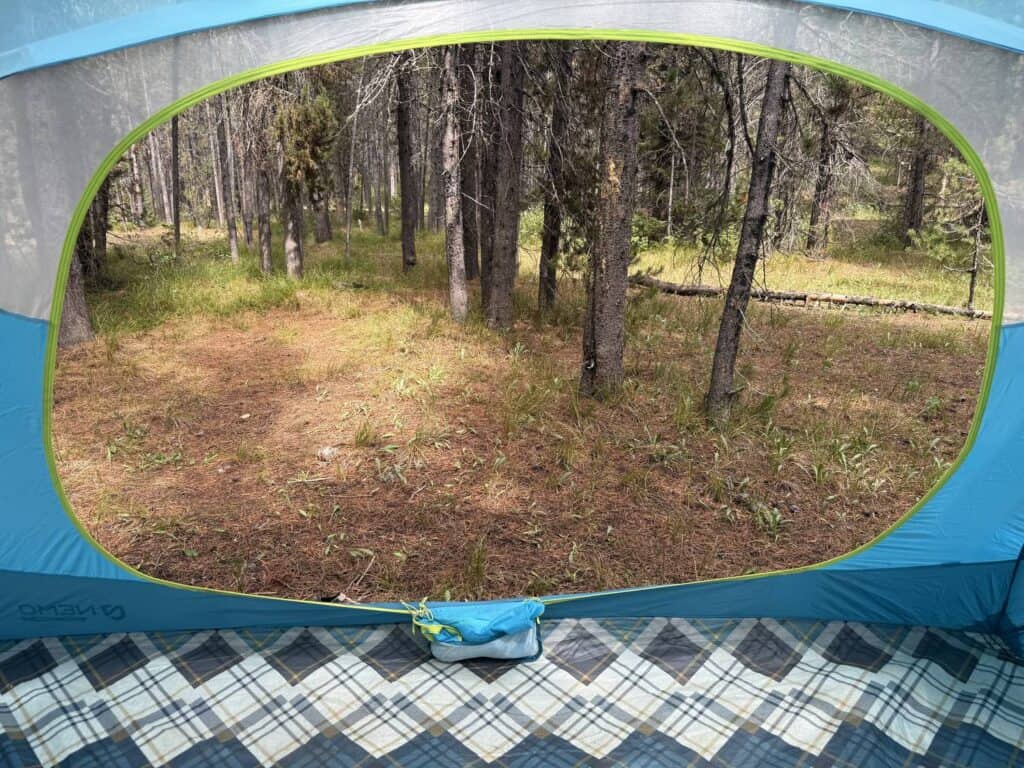
The short version: Easy to pitch, hard to knock over, and pretty dang livable.
Rank 3
#3 GOOD (budget buy)
Best budget family camping tent
Kelty Wireless 6
A starter tent that does more than its price suggests, as long as the weather cooperates.
Pros
- Roughly half the price of premium six-person tents
- Pre-attached guylines with stash pockets on the fly
- Pitched solo, fully guyed out, in 8 to 10 minutes
Cons
- Runs hot and doesn't vent well with the fly on
- A floor corner leaked a little in driving rain
- Few pockets for kid clutter
Capacity: 6 | Floor: 86.5 sq ft | Peak height: 74 in | Packed weight: 19 lb | How it fits: luxurious for 2–3, comfy for 4, tight for 5, pretty tight for 6
Not right for you if: You’ll camp a lot, in rough weather, or in direct sun.
This is our backyard tent. Cypress and Oren run around in the dark with headlamps, crawl in, and fall asleep, and if the weather turns, everyone goes inside. We’ve tested three or four versions of the Wireless 6 over the years, and it’s been to Grand Teton and Yellowstone with us too.
The guylines come attached, and each one tucks into a little pocket on the fly when you pack up. For a tent at this price, that’s a nice touch, and it’s great for new campers. It’s a fair-weather tent, though. The dark fly gets warm, and in an intense downpour a corner of the floor leaked a little. The materials feel budget when you pitch it, though ours has held up.
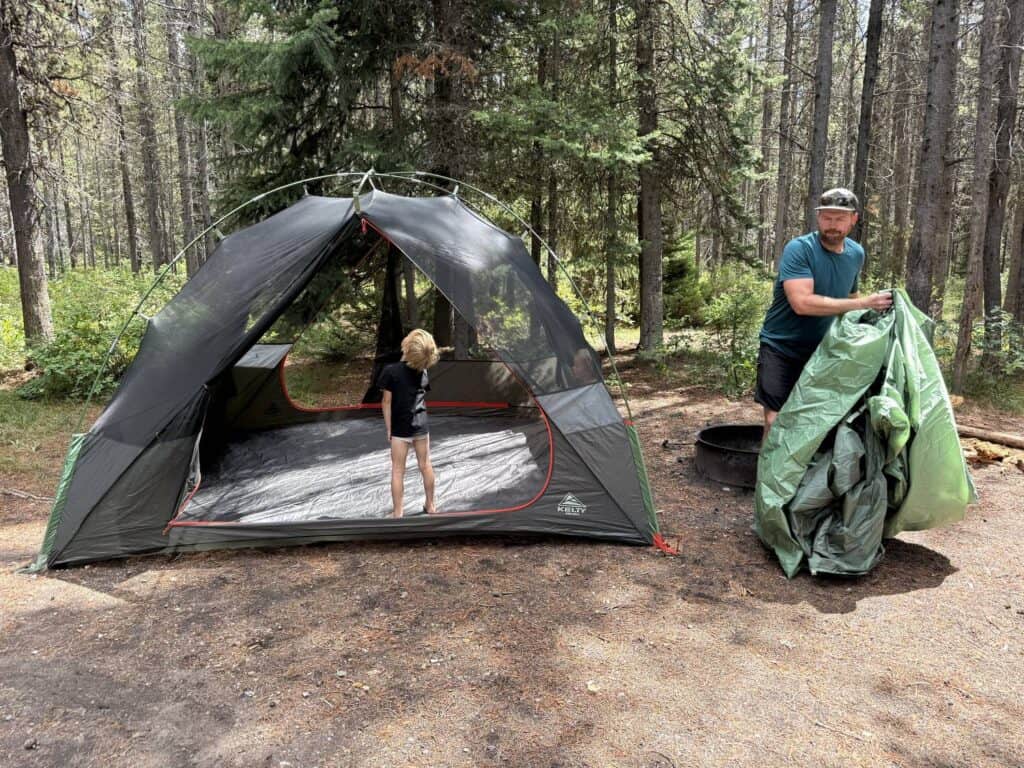
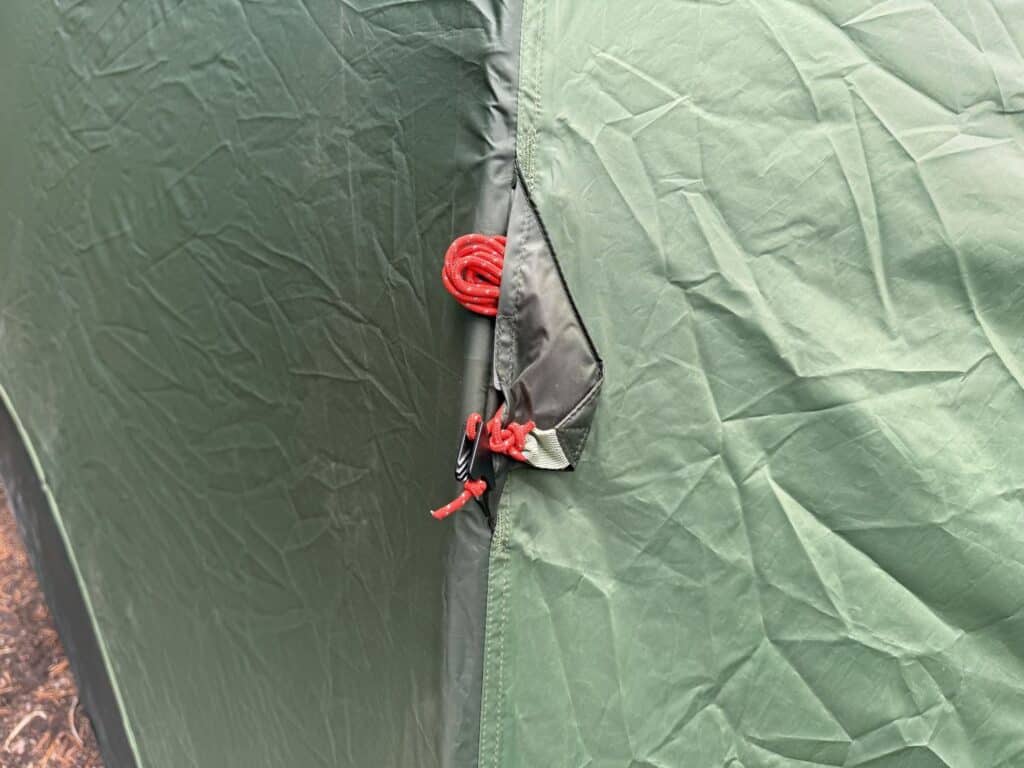
The short version: The right first tent, and the one you won’t mind the kids putting miles on.
Rank 4
#4. Best family tent for rough weather
REI Co-op Base Camp 6
The tent to bring when the forecast looks bad.
Pros
- Full fly, taped seams, and a lower profile make it our best weather performer
- 14 interior pockets
- Pole sleeves keep it stable in wind
Cons
- Involved five-pole setup
- Poles bend more easily than we'd like
- Heavy at 20 lb 11.5 oz
Capacity: 6 | Floor: 84 sq ft | Peak height: 74 in | Packaged weight: 20 lb 11.5 oz | How it fits: luxurious for 2–3, comfy for 4–5, a little tight at 6
Not right for you if: An involved setup makes you nervous, or you don’t need the space.
On a farm in Colorado, Isidore (10) and a group of her friends pitched most of this tent themselves (one adult helped with the tall parts) and slept in it alone. They loved how big and cozy it was. Our youngest kids filled all 14 pockets with rocks and dirt, which is not what the pockets are for.
We’ve had it in moderate rain, high wind, and blasting sun. You’ll hear it flap in wind, but the full fly and taped seams are why we trust it when the forecast turns wet. It takes 8 stakes to pitch, so bring extras if you want to fully guy it out. At 6’2″, one of us brushes the peak with his head.
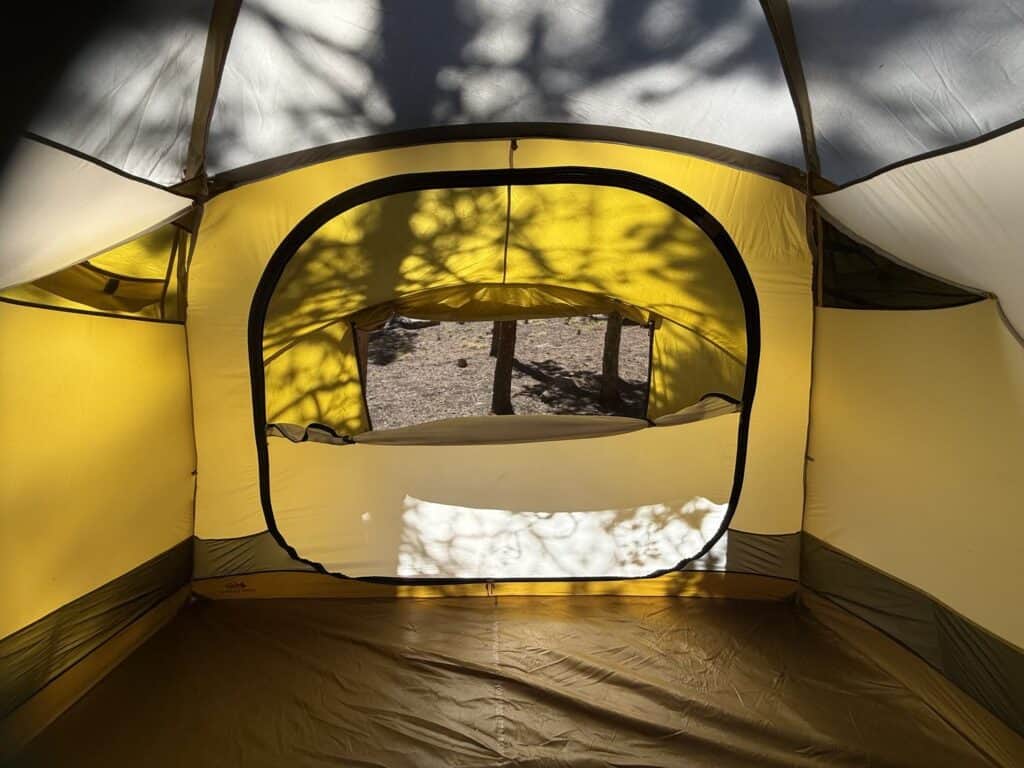
The short version: The tent to bring when the forecast looks bad.
Rank 5
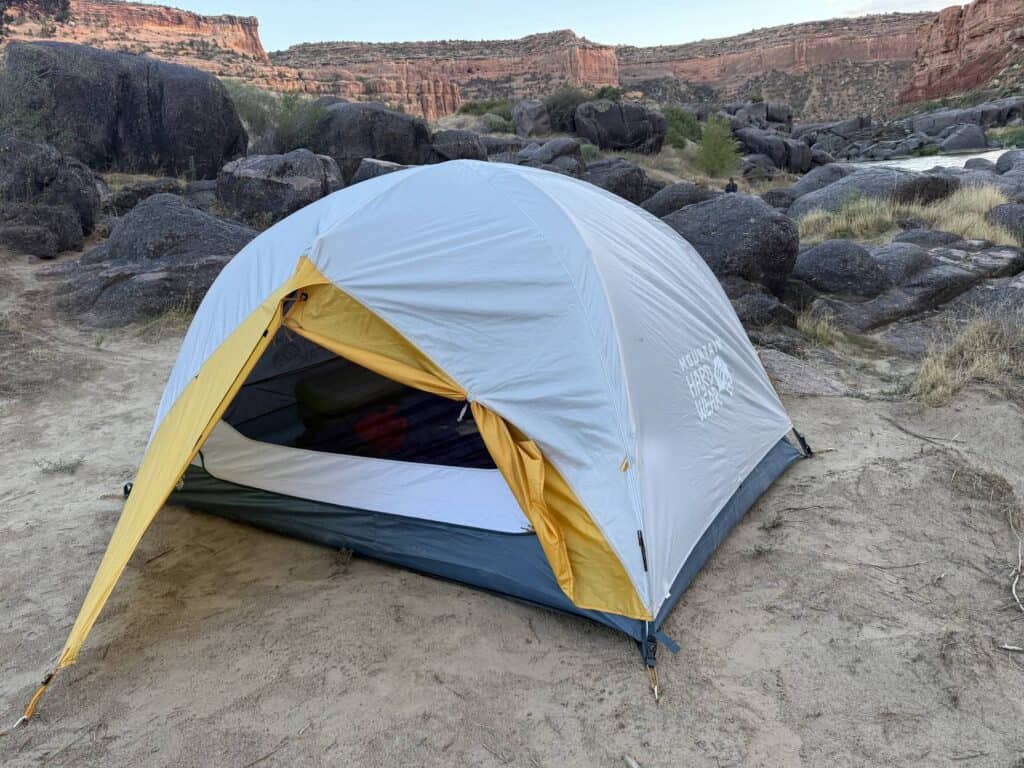
#5. Best crossover tent for car camping and backpacking
Mountain Hardwear Mineral King 3
One tent for car camping, river trips, and short backpacking trips. Guy it out.
Pros
- Easiest pitch in the lineup, under 5 minutes solo
- Footprint included
- Light enough to backpack (7 lb 13.7 oz packaged)
Cons
- 48-inch peak makes changing clothes a chore
- Some condensation when it's buttoned up
- No stakes included for the guylines
Capacity: 3 | Floor: 42.5 sq ft | Peak height: 48 in | Packaged weight: 7 lb 13.7 oz | How it fits: luxurious for 1, comfy for 2, tight for 3
Not right for you if: You’re a bigger family that only car camps.
Late last fall in Arapaho National Forest, we pitched this tent, didn’t guy it out, and walked away. The weather turned, wind and snow came in, and the tent took off down the mountain. No damage. We ran it down, re-pitched it, and guyed it out properly. That’s on us, not the tent.
On a summer river trip through Ruby-Horsethief, one of us and Cypress (5) shared a double sleeping bag in it. Night one brought a serious lightning storm and heavy rain, and it stayed dry. It’s small, so it fit tight river campsites and saved room on the boat.
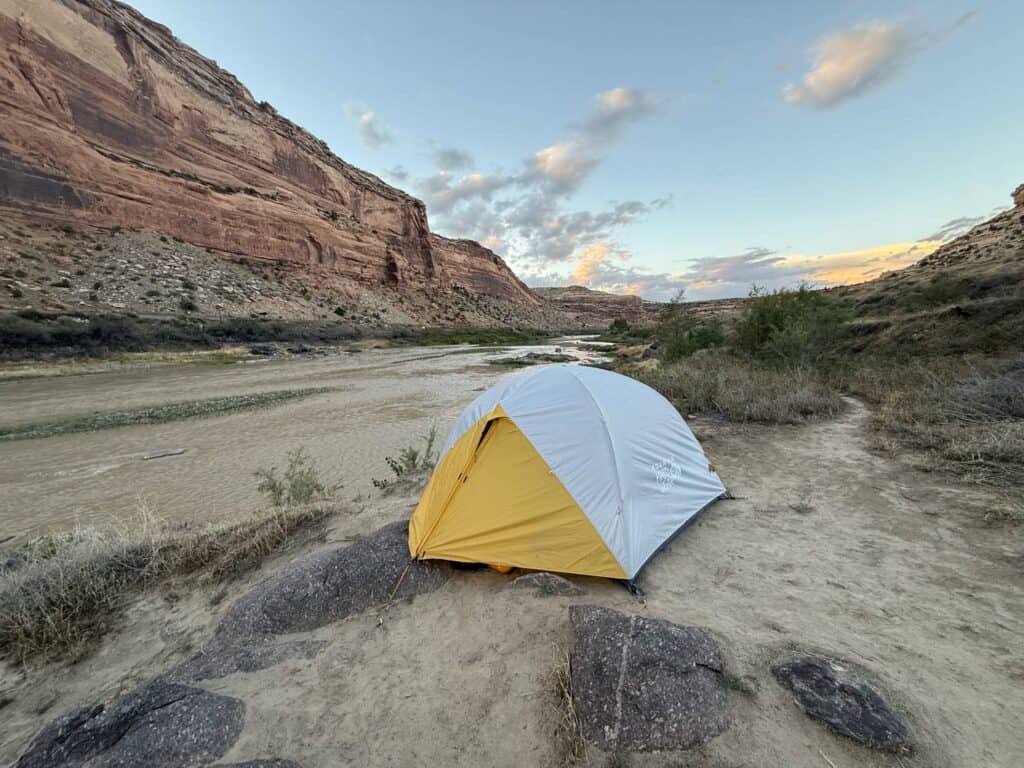
The short version: One tent for car camping, river trips, and short backpacking trips. Guy it out.
Read our more in-depth review of the Mountain Hardwear Mineral King 3
Rank 6
#6. Best family tent for warm, dry trips
REI Co-op Westward 6
A great summer campground tent. Pick something else for rainy country.
Pros
- Big front vestibule doubles as shade and a kid play zone
- Breathes well in heat
- Handles high wind well
Cons
- Two look-alike poles make setup confusing
- Partial fly; we wouldn't trust it in days of rain
- Sloppy carry bag
Capacity: 6 | Floor: 80.83 sq ft plus a 35.08 sq ft vestibule | Peak height: 77 in | Packaged weight: 19 lb 10 oz | How it fits: luxurious for 2, comfy for 3–4, manageable for 5–6
Not right for you if: You mostly camp somewhere wet, like the Pacific Northwest.
Our family of four spent a week in the Westward on the Arkansas River, Cypress and Oren in the middle, parents on the edges. In the afternoon, when the Colorado sun gets serious, the kids moved into the vestibule’s shade with their toys.
We’ve always pitched it solo, but we’d make it a two-person job. We bent a pole by swapping the brow pole and the vestibule pole, which look nearly identical. It still works fine. The partial fly means great airflow and little condensation, and it held up in moderate rain. In a real downpour, we’d trust that exposed canopy wall less.
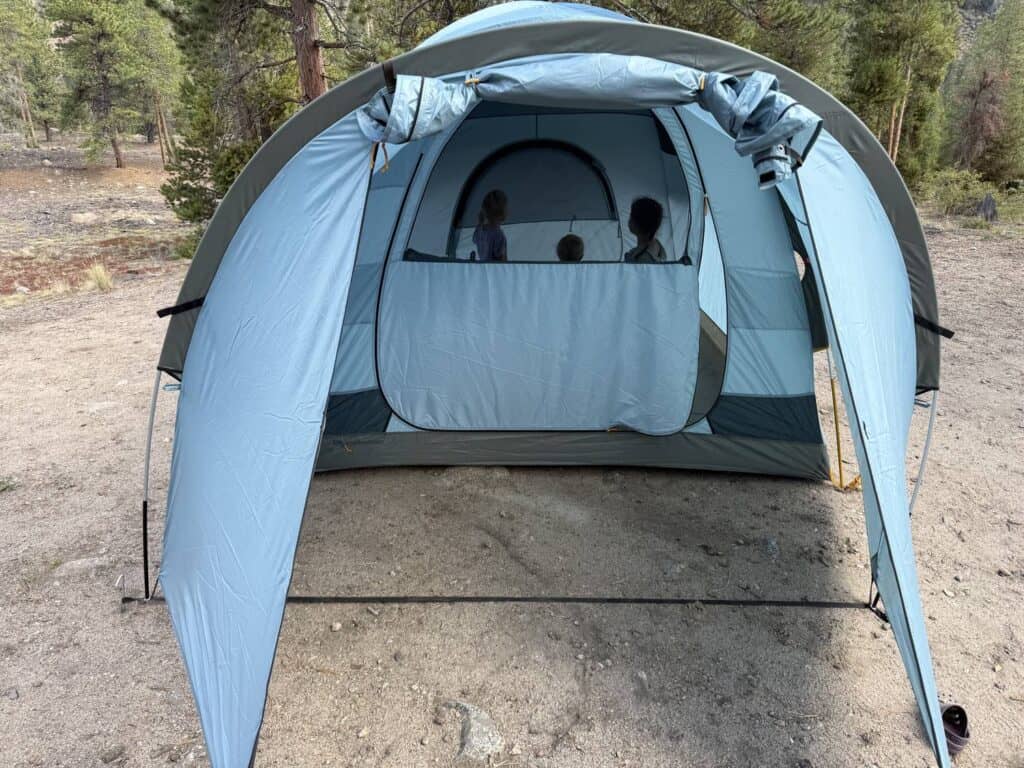
The short version: A great summer campground tent. Pick something else for rainy country.
Rank 7
#7. Best crossover tent for a family of four
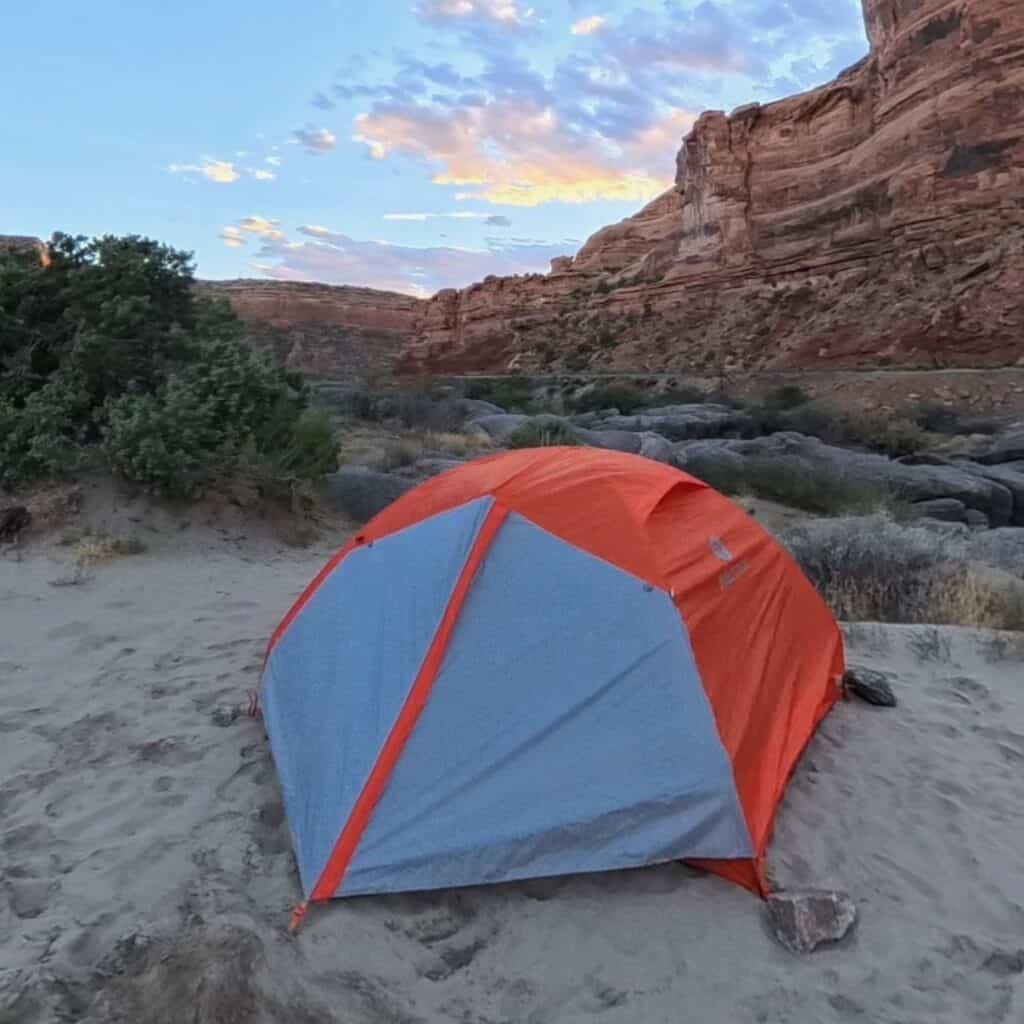
Marmot Tungsten 4P
A crossover that really does fit four. Just plan to store gear outside.
Pros
- Slept four of us (one double bag, two singles)
- Side-rolling door makes it easy for kids to get in and out
- Footprint included and easy to pitch
Cons
- Not much room for gear inside
- No guylines included, and not enough stakes to fully guy it out
- Floor needs its footprint in heavy rain
Capacity: 4 | Floor: 52.7 sq ft | Peak height: 52.8 in | Packaged weight: 9 lb 3.8 oz | How it fits: luxurious for 1–2, comfy for 3, tight for 4
Not right for you if: You only car camp with a big family, or you’re shopping on a tight budget.
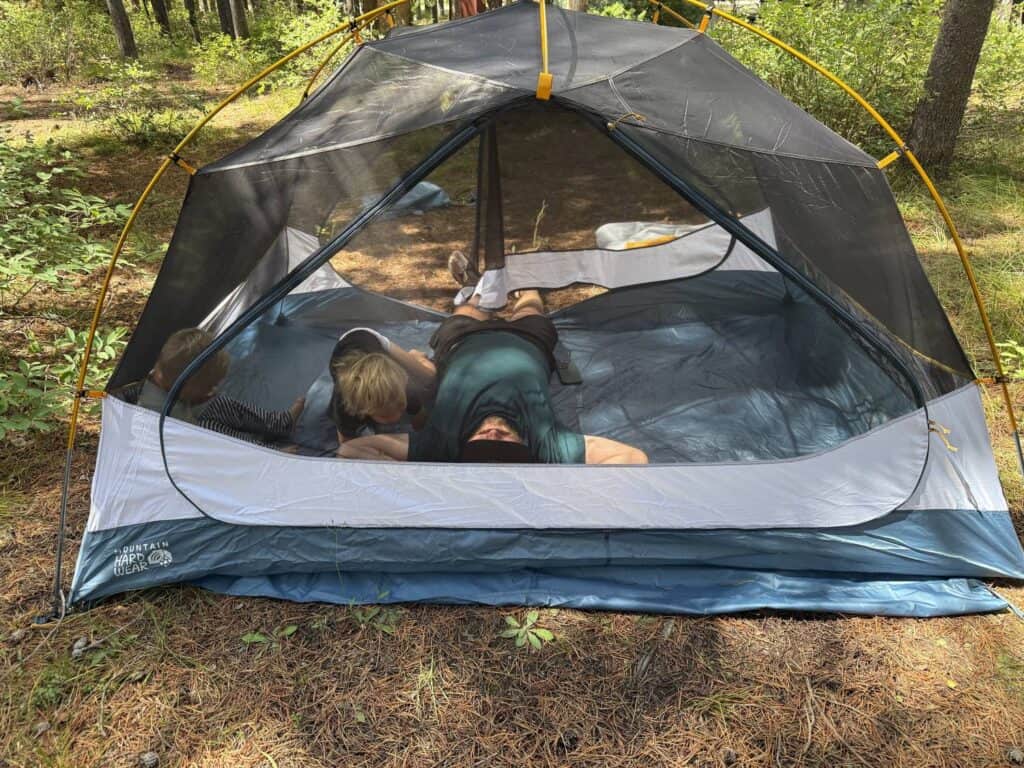
We’ve tested several versions of the Tungsten over the years, in both the 3-person and 4-person sizes, including the current 4P. (Photos show the 3P.) It’s been with us around the Rocky Mountain West, Glacier, the Pacific Northwest, and the Appalachians.
The current version runs two ridge poles across the top, and that’s a big part of why it feels roomier than the floor numbers suggest. Four of us fit, but gear lived in the vestibules. It sheds wind well thanks to its low shape, though the fabric crinkles in a breeze. It vents well, and some condensation shows up like it does in most small tents. We’ve had a little floor leakage in heavy rain without a footprint, so use the one in the box. It’s backpackable, but at 9 lb 3.8 oz packaged we’d only do it with the weight split between two packs.
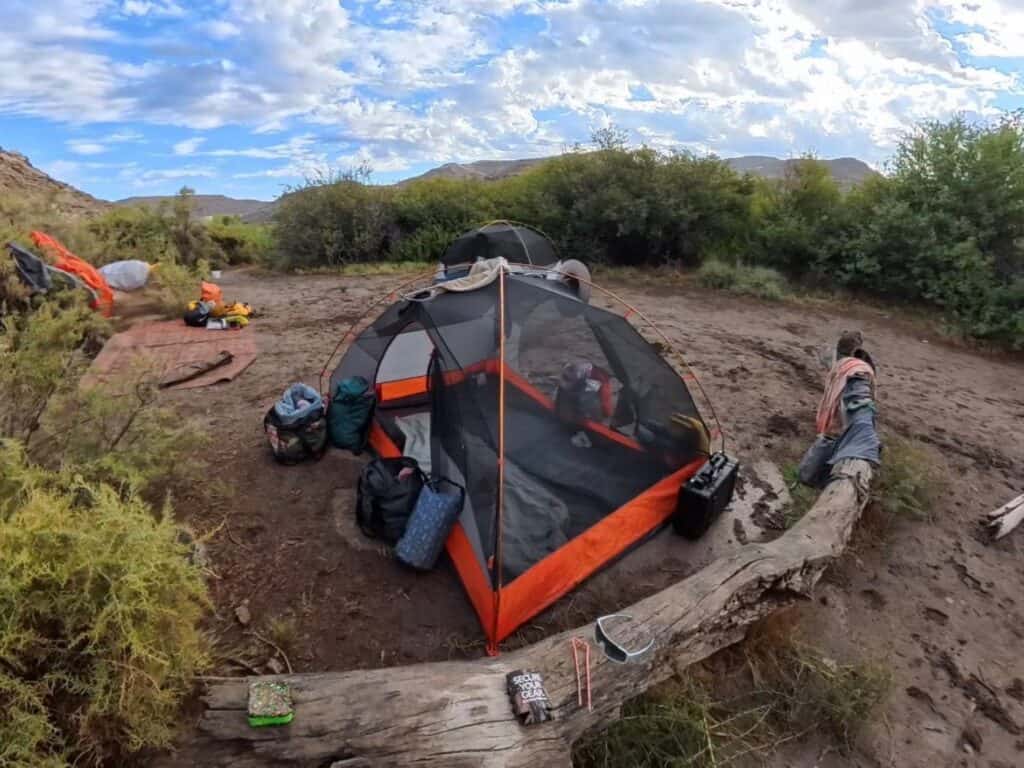
The short version: A crossover that really does fit four. Just plan to store gear outside.
How the Best Family Camping Tents Compare
| Tent | Price | Capacity | Floor | Peak Height | Weight | Footprint | Overall |
|---|---|---|---|---|---|---|---|
| The North Face Wawona 6 | $585 | 6 | 75.7 sq ft | 76 in | 19 lb 6.4 oz | Sold separately | 4.8/5.0 |
| NEMO Aurora Highrise 6 | $499.95 | 6 | 83.3 sq ft | 77 in | 18 lb 10 oz | Sold separately | 4.7/5.0 |
| Kelty Wireless 6 | $279.95 | 6 | 86.5 sq ft | 74 in | 19 lb | Sold separately | 4.1/5.0 |
| REI Co-op Base Camp 6 | $569 | 6 | 84 sq ft | 74 in | 20 lb 11.5 oz | Sold separately | 4.5/5.0 |
| Mountain Hardwear Mineral King 3 | $400 | 3 | 42.5 sq ft | 48 in | 7 lb 13.7 oz | Included | 4.5/5.0 |
| REI Co-op Westward 6 | $549 | 6 | 80.83 sq ft | 77 in | 19 lb 10 oz | Sold separately | 4.3/5.0 |
| Marmot Tungsten 4P | $449 | 4 | 52.7 sq ft | 52.8 in | 9 lb 3.8 oz | Included | 4.3/5.0 |
So Which Family Camping Tent Should You Buy?
If you want the most livable basecamp for a family with gear: The North Face Wawona 6. Its vestibule holds bikes, chairs, and toys out of the rain.
If you camp somewhere windy and want a quick pitch: NEMO Aurora Highrise 6. It stayed up in a desert-river thunderstorm on sandy ground.
If you’re on a budget or buying your first tent: Kelty Wireless 6. Roughly half the price of the premium tents, as long as the weather is mostly fair.
If you expect bad weather or have older kids who want their own tent: REI Co-op Base Camp 6. The full fly and lower profile make it our best weather performer.
If you want one tent for car camping, river trips, and short backpacking trips: Mountain Hardwear Mineral King 3. Easiest pitch in the lineup, footprint included.
If you camp mostly in hot, dry summers: REI Co-op Westward 6. It breathes well, and the vestibule makes great afternoon shade.
If you’re a family of four who wants a crossover tent: Marmot Tungsten 4P. It fits four with gear in the vestibules.
Frequently Asked Questions About Family Camping Tents
What is the best family camping tent?
The North Face Wawona 6 is our top pick for its huge vestibule, standing height, and solid weather performance. If you’re on a budget, the Kelty Wireless 6 costs $279.95 and works well for fair-weather camping.
What size tent does a family of four need?
For most families of four, a six-person tent is the comfortable choice. In our testing, the Wawona 6, Aurora Highrise 6, and Base Camp 6 all felt comfortable for four to five people, while a four-person tent like the Tungsten 4P fits four with gear stored outside.
Do I need a footprint for my tent?
We recommend one for every tent, and the Mineral King 3 and Tungsten 4P include one. A footprint protects the floor, and we’ve seen floor leakage in heavy rain on a tent pitched without one.
How do I keep a tall family tent from blowing away?
Stake every corner and use every guyline, even when the weather looks calm. Several tents we tested didn’t include enough stakes to fully guy them out, so pack extras, and pitch somewhere sheltered from the wind when you can.
Is the Wawona 6 worth $585?
If you’ll use the vestibule, yes. It’s what sets this tent apart, giving you a dry place for bikes, chairs, and kid gear. If you don’t need that space, you’re paying for fabric and setup time you won’t use.
How do I keep my tent waterproof longer?
Keep the fabric as free of dust and dirt as you can. Dirt and dust hold moisture against the tent and make it more likely to seep through the fabric. Our easy fix: hit the tent with a leaf blower to knock off loose dirt and dust before you pack it up, and make sure it’s completely dry before you store it.
Can you backpack with a family camping tent?
Not with the big six-person tents, which weigh around 18 to 21 pounds. Crossover tents like the Mineral King 3 and Tungsten 4P can work for short trips if you split the tent between two packs.

Ben Dawson
I'm Ben Dawson: dad of two, former full-time van liver, and co-author of three Falcon Guides, including Hiking with Kids: Glacier and Waterton Lakes National Parks. I've worked in outdoor media for more than a decade, and I've been testing gear with Roxy since 2017 as a gear reviewer and analyst. These days most of my testing happens with a kid on my back or a tent full of them. I've carried and hiked with my kids more miles than I can count, from Canada to Mexico and plenty of places in between. My rule is pretty simple: if the kid is uncomfortable, or you are, nobody's having a good time out there. I tell you what works, what doesn't, and who it's actually for.
More posts by Ben