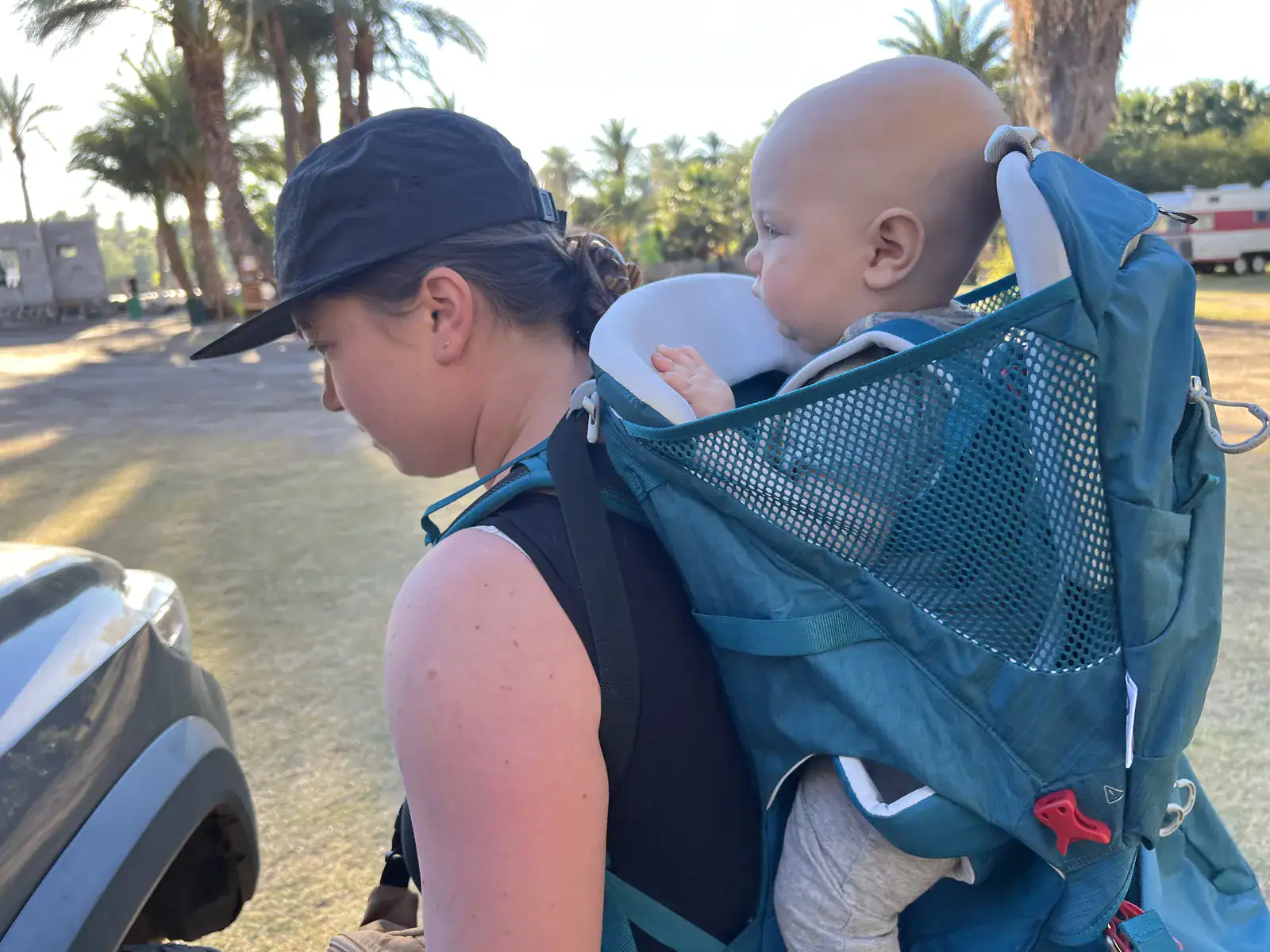
We buy almost all of our kids’ shoes online. That works great right up until the box shows up and nothing fits.
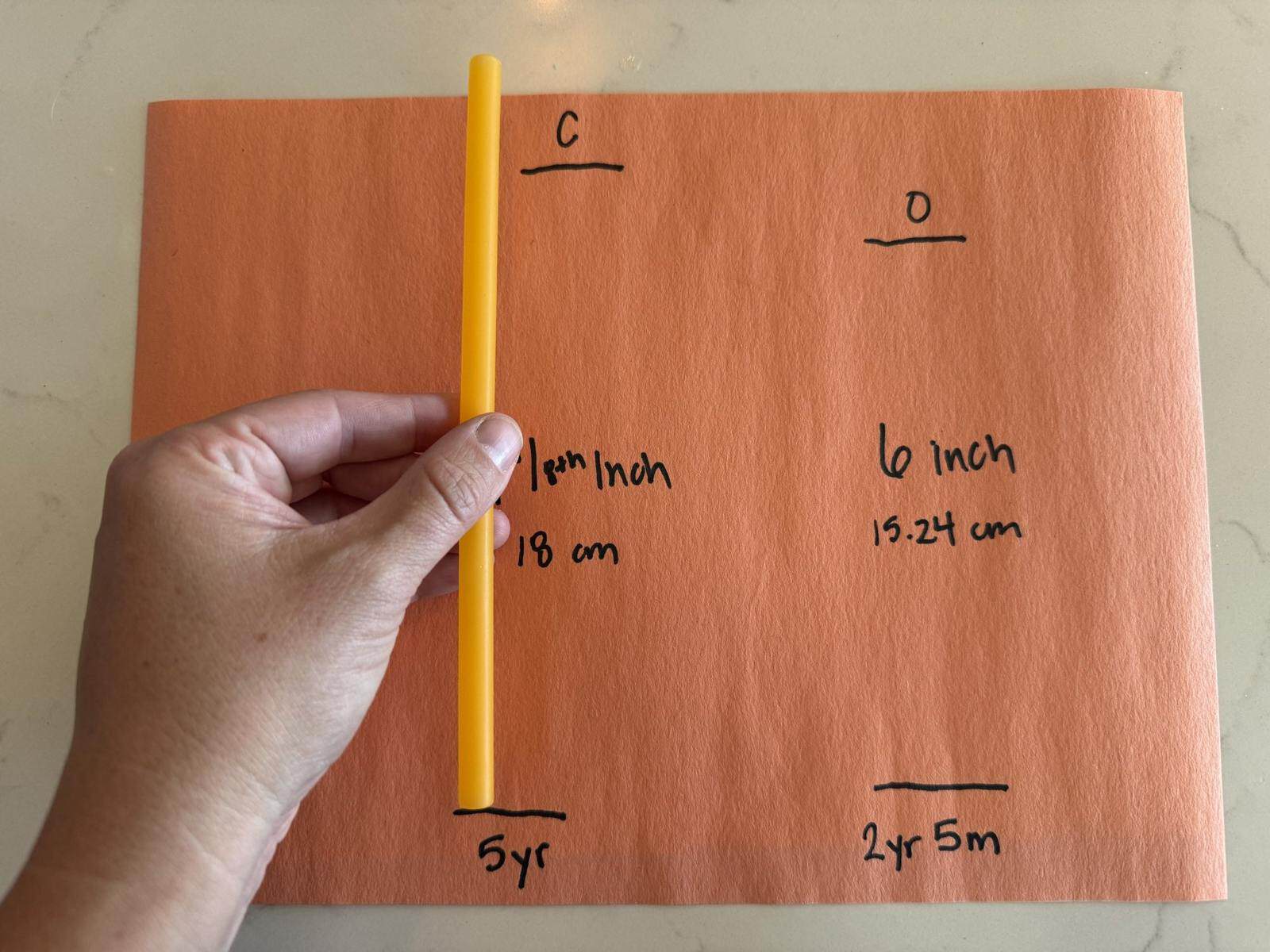
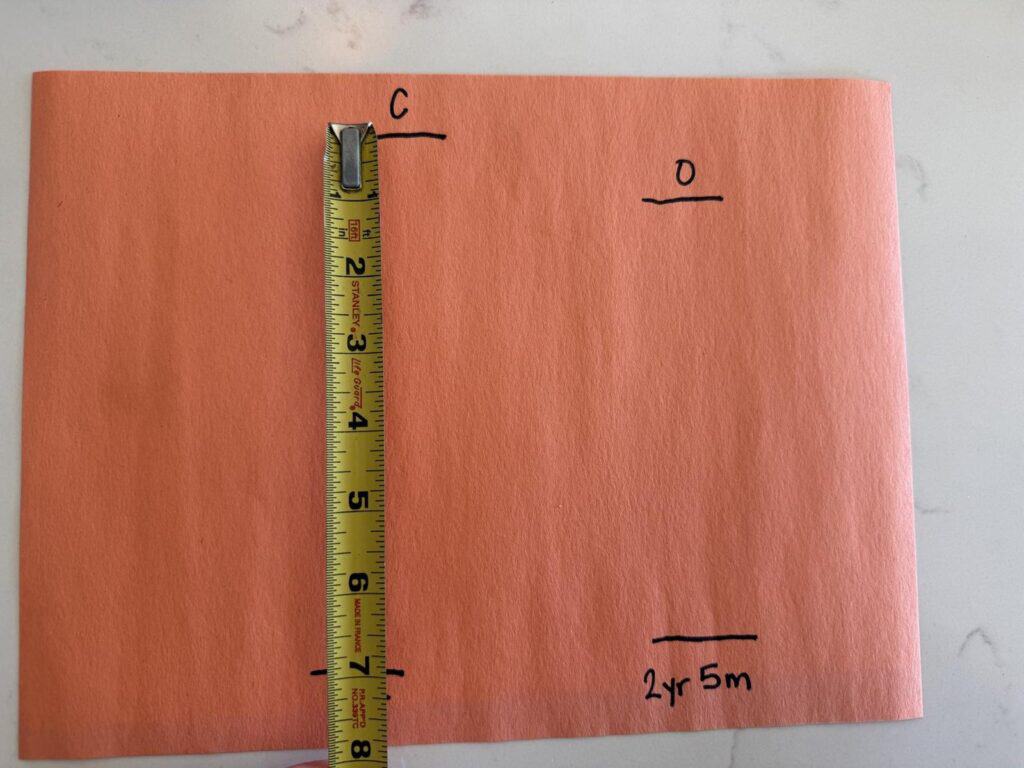
We stopped trusting age-based sizing the day we realized Oren (2) had feet almost as big as his brother Cy’s (5). Oren measured 6 inches. Cy measured 7 1/8 inches. That’s just over an inch apart, with nearly three years between them. If we’d shopped by age, or by whatever size a chart says a two-year-old usually wears, we would have gotten it wrong. We went off what we measured, and the shoes fit.
Kids’ feet don’t follow averages, so we don’t either. This is the only method we use, every time we buy new shoes. It’s quick and needs nothing you don’t already have in a kitchen drawer.
What you need
- A sheet of paper longer than your kid’s foot
- A pen or marker
- A tape measure or ruler
- A plastic straw and scissors (only if you’re shopping in a store)
- A kid willing to stand still for longer than they would like. This is the hardest part.
Step 1: Draw a line at the heel and the toe
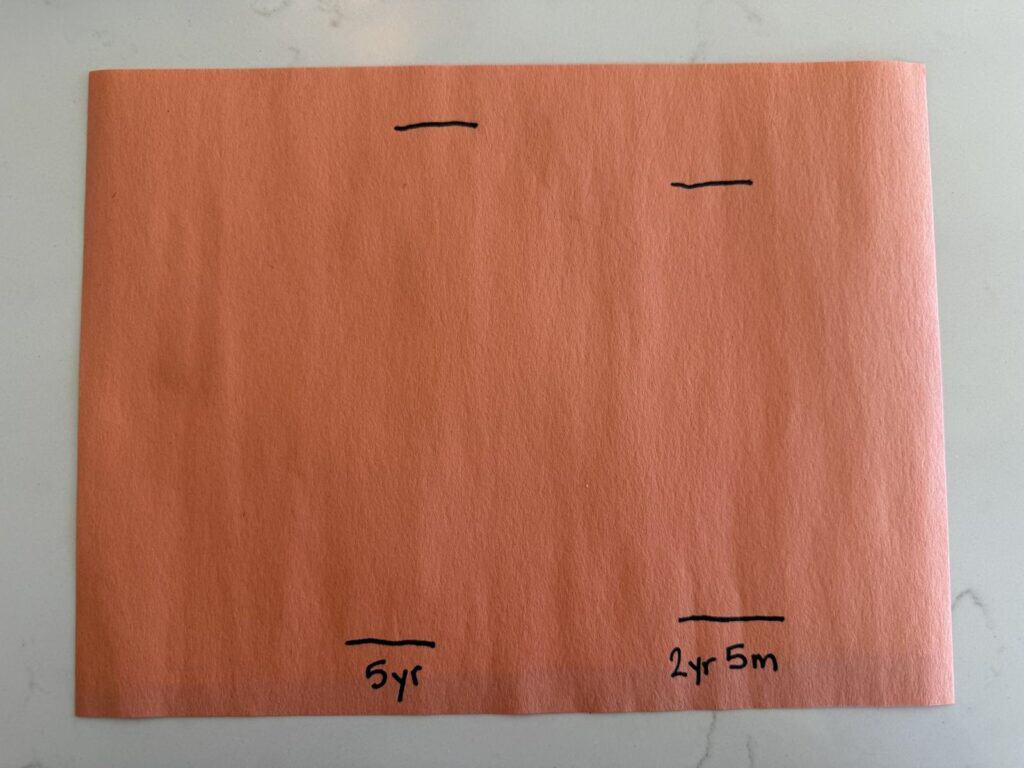
Lay the paper on a hard, flat floor and have your kid stand on it with their weight on that foot. Draw a straight line across the paper right at the back of the heel, then another at the tip of the longest toe. That isn’t always the big toe. Hold the pen straight up and down so it doesn’t tuck under the foot and shave off length.
Have them stand, not sit. The American Academy of Orthopaedic Surgeons (AAOS) notes that body weight spreads the foot out, and that one foot is often slightly larger than the other, so measure both and size for the bigger one. If the shoes will be worn with thick socks, measure in those socks.
Measuring two kids? Put both on the same sheet and label the lines. We wrote ages next to ours, which also makes for a nice keepsake.
Step 2: Measure between the lines
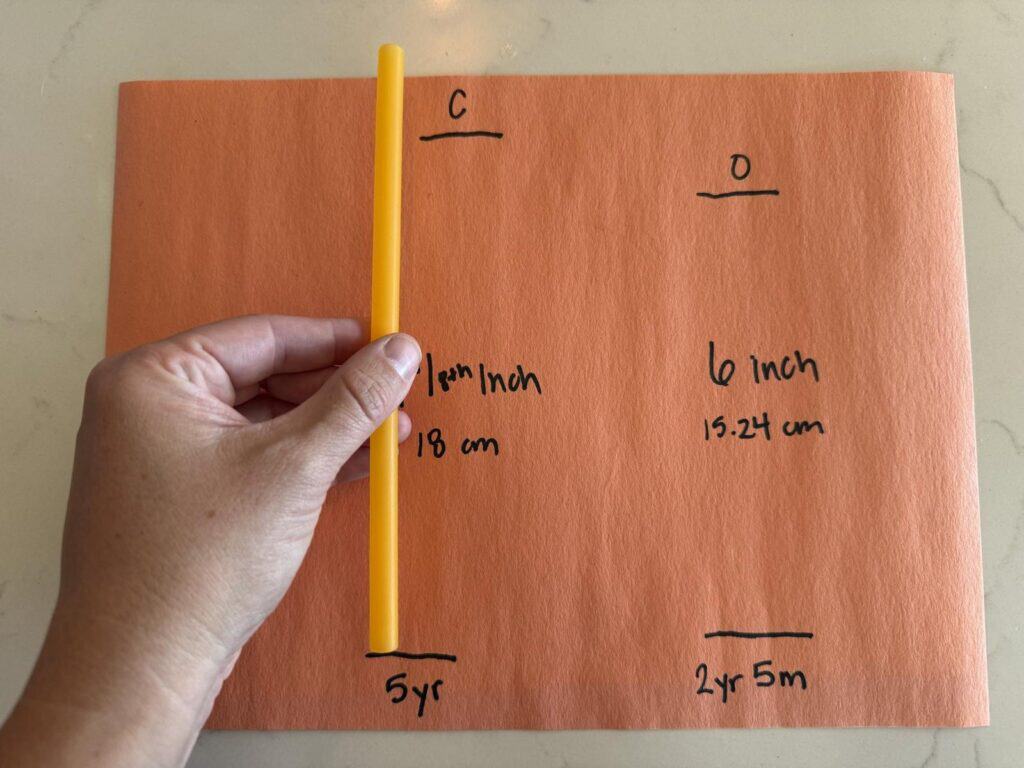
Pick the paper up and measure from the heel line to the toe line. Write the number on the paper in both inches and centimeters, since brands size in one or the other. Cy (5) came in at 7 1/8 inches (18 cm). Oren (2) came in at 6 inches (15.24 cm).
Step 3: Add room to grow
Foot length is not shoe length. Kids need space at the front of the shoe to grow into and to keep their toes from jamming on downhills. We add about 1/2 inch, depending on the shoe. That’s toe room, not sizing up. A shoe that’s too big slides around on the trail.
That matches the guidance from the American Orthopaedic Foot & Ankle Society (AOFAS), which says kids’ shoes should have at least 1 cm (about 1/2 inch) of space for the toes. AAOS puts it another way: a finger’s breadth of extra length usually allows for about 3 to 6 months of growth.
For us, that means shopping for about 7 5/8 inches for Cy and 6 1/2 inches for Oren.
Step 4: Match it to the brand’s size chart
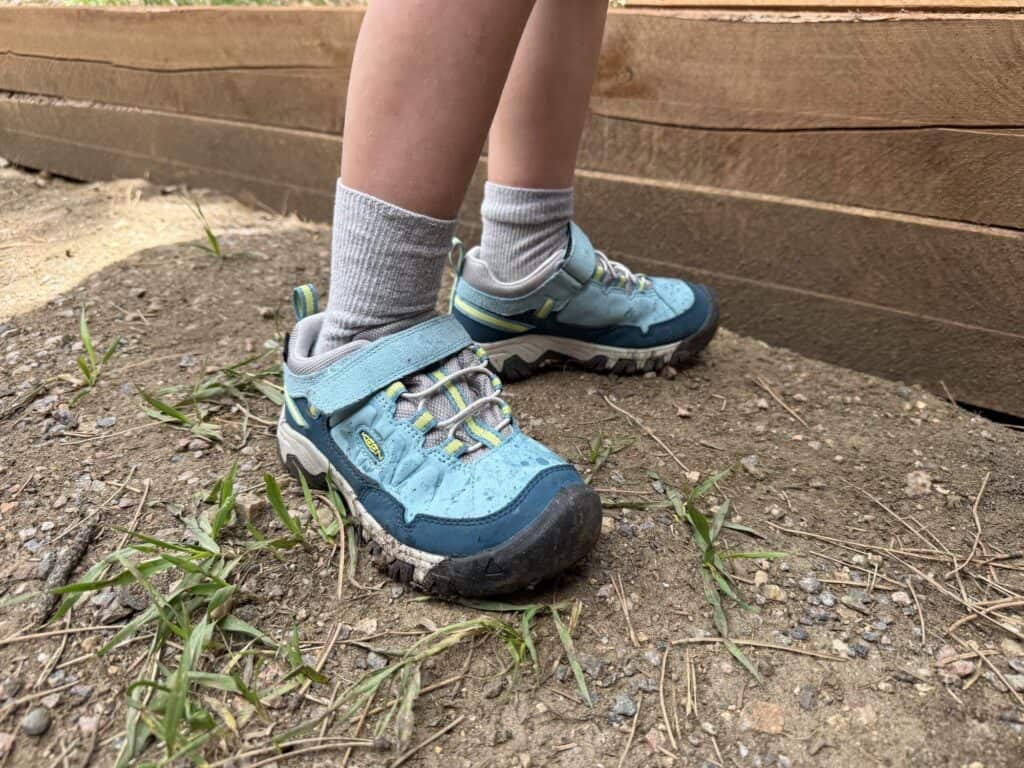
Open the size chart for the exact shoe you’re buying and find the size that matches your number with growth room added. Use that brand’s chart, not a generic one, because sizing varies from brand to brand. If your kid lands between sizes, Children’s Wisconsin’s orthopedic team says it is better to buy shoes that are too big than too small.
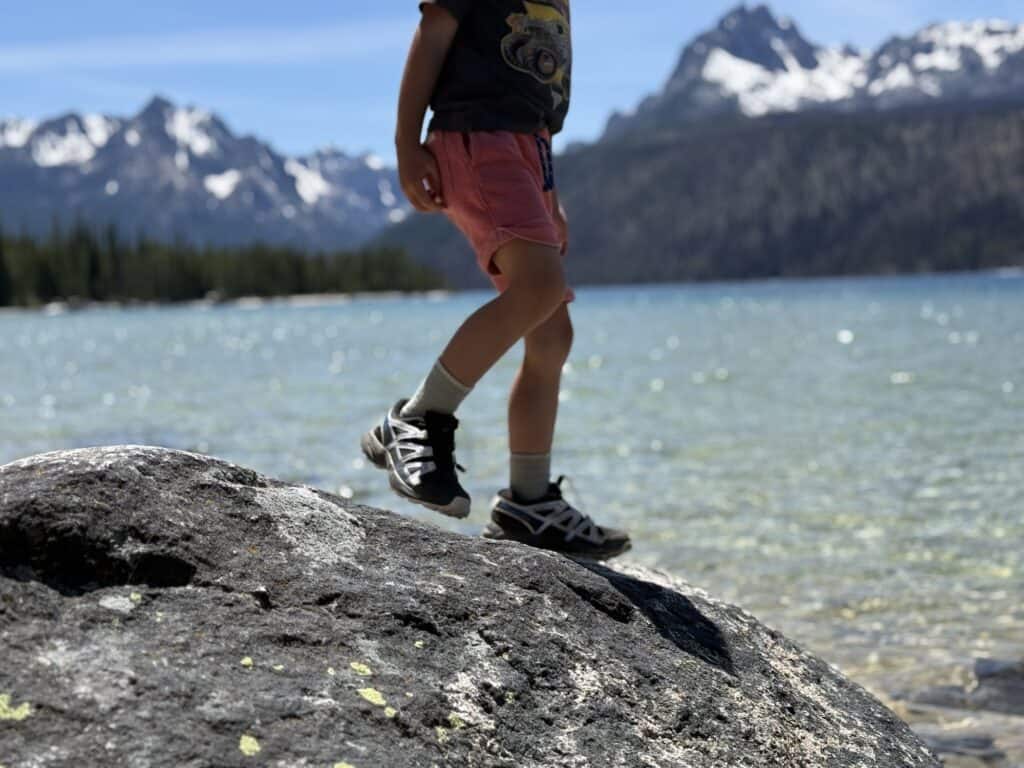
Shopping for trail shoes? Our Best Hiking Shoes for Kids guide covers the six pairs we’ve tested on everything from slickrock to lake crossings.
In the store? Bring a straw
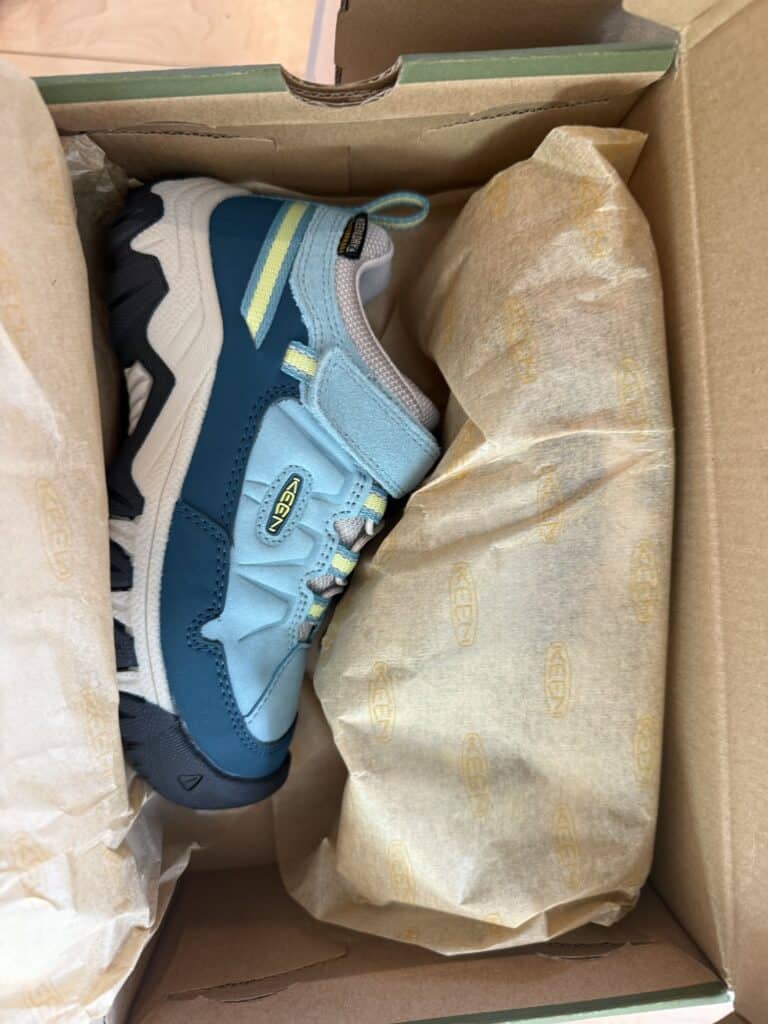
If you’re buying in person and already know what you want, skip the try-on marathon. Cut a plastic straw, the kind you get at a restaurant, to your kid’s foot length plus growth room. Slide it into the shoe until it touches the toe.
A straw bends, so it slips past the tongue and laces and into the toe box more easily than a ruler would. If the straw has to buckle to fit, the shoe is too short. If there’s a big gap behind it at the heel, the shoe is too long.
You’ll notice ours is a reusable straw. We didn’t have a plastic one because, as established, we buy everything online. A cheap plastic straw works better since it bends.
How often to re-measure
Kids outgrow shoes fast. AOFAS foot and ankle surgeons say parents usually need to replace kids’ shoes about every 4 to 6 months, and more often for kids under three. They also recommend checking fit every 3 to 4 months, or whenever shoes show significant wear.
We re-measure every time we buy new shoes, no matter how recently we did it last. With Oren under three, that’s often.
Frequently Asked Questions About Measuring Kids’ Feet
How much room should kids’ shoes have at the toe?
About 1/2 inch. The American Orthopaedic Foot & Ankle Society recommends at least 1 cm (about 1/2 inch) of space for the toes. We add about 1/2 inch to the measured foot length, depending on the shoe.
How often do kids need new shoes?
Foot and ankle surgeons with the American Orthopaedic Foot & Ankle Society say about every 4 to 6 months, and more often for kids under three. Check the fit every 3 to 4 months.
Can I buy kids’ shoes by age?
We don’t. Our two-year-old’s feet measured just over an inch shorter than our five-year-old’s, much closer than their ages would suggest. Measure the foot and match it to the brand’s size chart.
How do I measure my kid’s foot at home?
Have your kid stand on a piece of paper, draw a line at the back of the heel and the tip of the longest toe, and measure between the lines. Add about 1/2 inch for growth, then match that number to the brand’s size chart.

Sources: New Shoes for Kids: Where Do I Start? (American Orthopaedic Foot & Ankle Society); Shoes: Finding the Right Fit (American Academy of Orthopaedic Surgeons); Proper Shoes for Your Child (Children’s Wisconsin).

Roxy Dawson
I'm Roxy Dawson — New Yorker turned Coloradan, former full-time van dweller, outdoor industry veteran, and co-author of three Falcon Guides. I've spent the better part of a decade testing outdoor gear for adults across some genuinely terrible conditions. Then I had kids, noticed that nobody was doing that work honestly for the 0–14 age set, and built the site I kept wishing existed. Everything on Good Better Best has been tested by my actual children — currently ages two and five, with strong opinions and zero patience for gear that doesn't work. I test first. I write second. I don't recommend things I wouldn't buy with my own money.
More posts by Roxy